
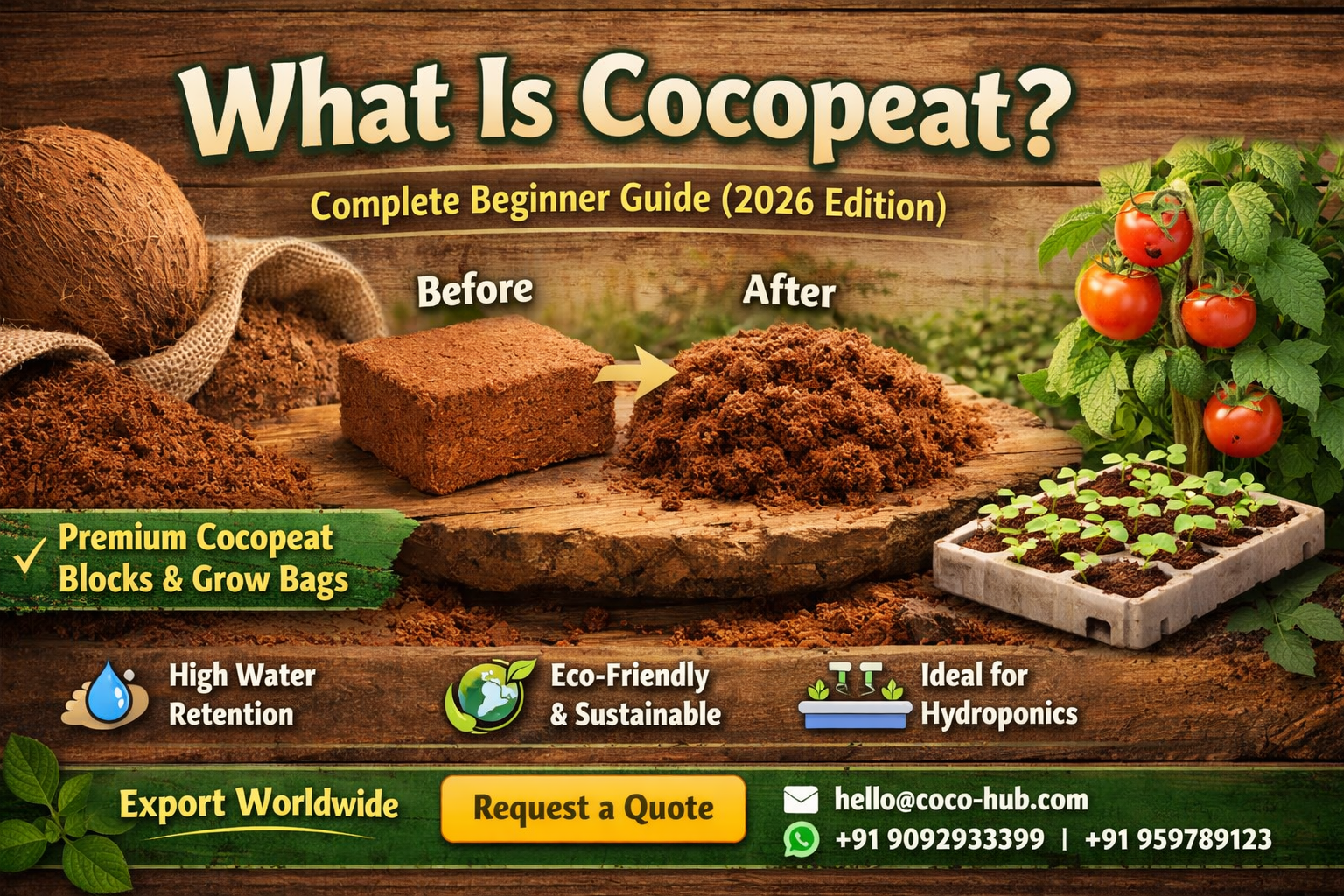
What Is Cocopeat? Complete Beginner Guide (2026 Edition)
If soil is the ancient storyteller of agriculture, cocopeat is the modern remix—cleaner, smarter, and surprisingly powerful.
Whether you’re starting a home garden, planning a hydroponics setup, or exploring commercial farming, cocopeat has quietly become a backbone of sustainable growing. Yet many beginners still ask:
“What exactly is cocopeat… and why is everyone talking about it?”
Let’s unpack everything—from what it is, to how to use it, to why it’s becoming a global export powerhouse.
👉 About Us page (https://coco-hub.com/about-us/)
Premium Export Quality Cocopeat from India 🇮🇳
✔ 5kg Blocks
✔ Low EC Washed & Buffered
✔ Custom Packaging Available
✔ Bulk Export to EU, Middle East, USA
📩 Email: [email protected]
📱 Call / WhatsApp: +91 9092933399 | +91 9597829123
Request a Quote
1. What Is Cocopeat? (Simple Explanation)
Cocopeat, also known as coir pith, is a natural growing medium made from the fibrous husk of coconuts.
When coconuts are processed to extract fibers (used in ropes, mats, brushes), a soft, spongy byproduct remains. That leftover material is cocopeat.
Think of it as:
- A soil alternative
- A water sponge
- A root-friendly cushion
It looks like fine brown powder or compressed blocks—and when you add water, it expands dramatically like a time-lapse mushroom.
2. Where Does Cocopeat Come From?
Cocopeat is produced mainly in coconut-growing countries like:
- India 🇮🇳 (Tamil Nadu is a major hub)
- Sri Lanka 🇱🇰
- Indonesia 🇮🇩
- Philippines 🇵🇭
The Production Process (Simplified)
- Coconut husks are collected
- Fibers are extracted (used in coir products)
- Remaining pith is washed and dried
- It is compressed into blocks, bricks, or grow bags
That compact brick you see? Add water and it expands up to 5–8 times its size.
For a detailed breakdown, visit:
👉 Production & Logistics (https://coco-hub.com/production-logistics/)
3. Types of Cocopeat (Know Before You Buy)
Not all cocopeat is created equal. Choosing the right type is like picking the right engine for your machine.
1. Cocopeat Blocks (5kg / 650g bricks)
- Most common form
- Needs water to expand
- Ideal for bulk users and exporters
2. Loose Cocopeat
- Ready to use
- No expansion needed
- Great for small home gardeners
3. Buffered Cocopeat
- Treated to remove excess salts
- Essential for hydroponics and sensitive plants
4. Washed Cocopeat
- Lower EC (electrical conductivity)
- Suitable for commercial farming
5. Cocopeat Grow Bags
- Pre-filled and ready for planting
- Popular in greenhouse farming
Product Categories page (https://coco-hub.com/)
🌍 Why Choose Coco Hub?
We are a global exporter supplying to Europe, the Middle East, and beyond.
👉 See our real manufacturing and export operations here:
Gallery Page (https://coco-hub.com/gallery/)
Transparency builds trust—and trust closes deals.
4. Why Cocopeat Is So Popular (Key Benefits)
Here’s where cocopeat starts flexing its superpowers:
🌊 1. High Water Retention
Cocopeat can hold 8–10 times its weight in water.
Plants stay hydrated longer → less frequent watering.
🌱 2. Excellent Aeration
Roots don’t suffocate. Air flows easily, preventing root rot.
🌍 3. Eco-Friendly
- Made from waste material
- 100% biodegradable
- Renewable alternative to peat moss
⚖️ 4. Neutral pH
Ideal pH range: 5.5 – 6.8
Works for most plants without adjustment.
🧼 5. Pest & Disease Resistant
Unlike soil, it’s cleaner and less prone to pathogens.
🚚 6. Lightweight & Easy to Transport
Compressed blocks reduce shipping costs massively—huge advantage for export businesses (you’d know 😉).
5. Cocopeat vs Soil vs Peat Moss
Let’s break it down:
| Feature | Cocopeat | Soil | Peat Moss |
|---|---|---|---|
| Water Retention | High | Medium | Very High |
| Aeration | Excellent | Low–Medium | Good |
| Eco-Friendly | Yes | Yes | No (non-renewable) |
| Weight | Light | Heavy | Light |
| Nutrients | Low | High | Low |
👉 Key Insight:
Cocopeat is not a replacement for nutrients—it’s a growing medium, not a fertilizer.
6. How to Use Cocopeat (Step-by-Step)
Step 1: Hydrate the Block
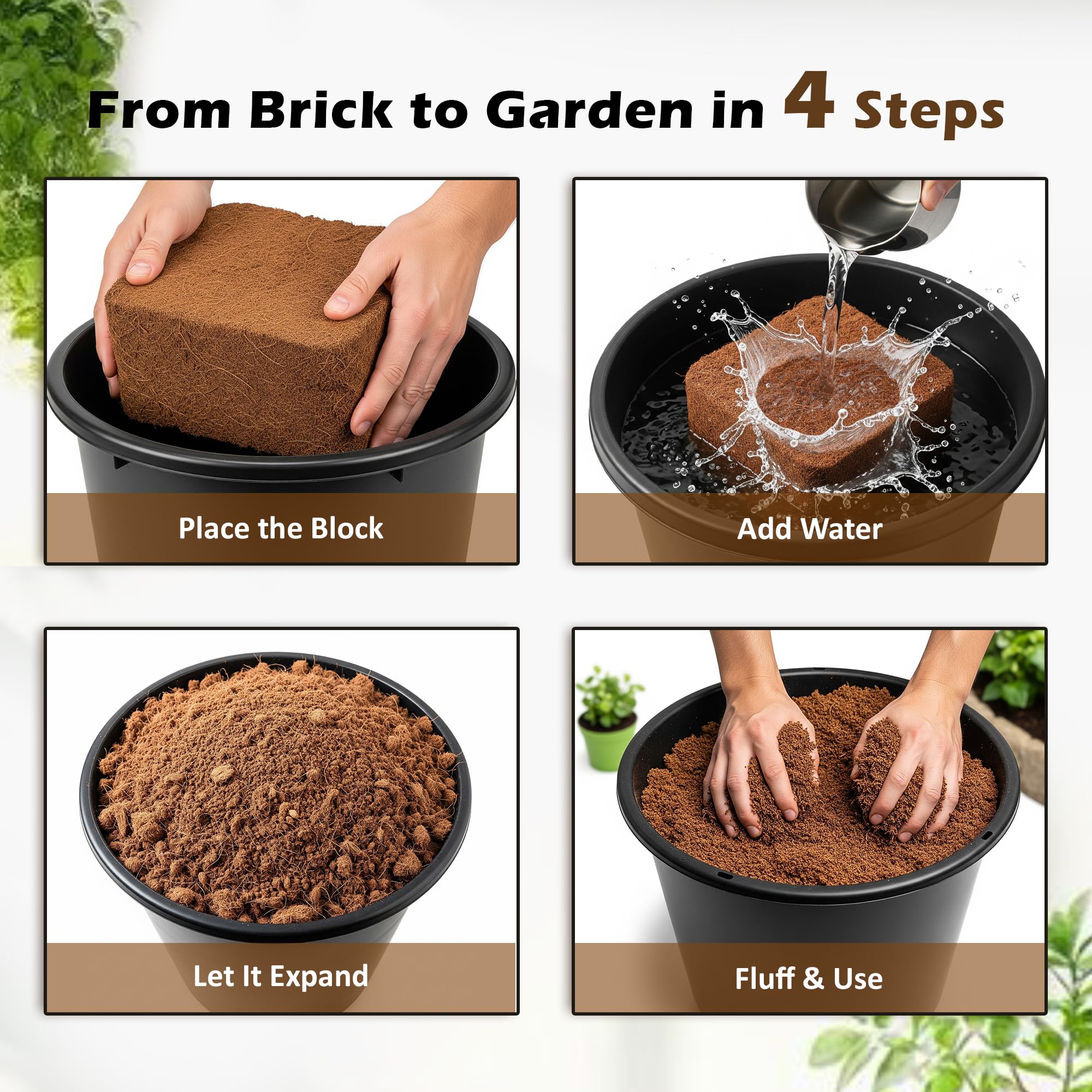
- Place block in a container
- Add water slowly
- Wait 15–30 minutes
- Fluff it up
Step 2: Mix (Optional but Recommended)
For best results, mix:
20% perlite or sand
50% cocopeat
30% compost
Step 3: Planting
- Fill pots or beds
- Insert seeds or plants
- Water lightly
Step 3: Planting
- Fill pots or beds
- Insert seeds or plants
- Water lightly
7. Best Plants to Grow in Cocopeat
Cocopeat is surprisingly versatile:
🥬 Vegetables
- Tomatoes
- Cucumbers
- Capsicum
- Leafy greens
🌸 Flowers
- Roses
- Gerbera
- Petunia
🪴 Indoor Plants
- Money plant
- Snake plant
- Peace lily
🍓 Fruits (Hydroponics)
- Strawberries
- Blueberries
8. Cocopeat in Hydroponics & Modern Farming
Cocopeat is a star player in:
- Hydroponics
- Vertical farming
- Greenhouse cultivation
Why?
Because it offers:
- Controlled growing environment
- Consistent moisture
- Zero soil dependency
Grow bags filled with cocopeat are now standard in commercial farms.
9. Common Mistakes Beginners Make
Even good soil can grow bad habits. Avoid these:
❌ Using raw cocopeat without washing
→ Can contain salts
❌ Overwatering
→ Cocopeat already holds water well
❌ Not adding nutrients
→ Plants will starve
❌ Using it alone for long-term growth
→ Always mix with compost/fertilizer
10. Cocopeat EC & Buffering (Important for Serious Growers)
If you’re going commercial or hydroponic, this matters.
- EC (Electrical Conductivity) indicates salt content
- High EC = harmful for plants
Buffered Cocopeat:
- Treated with calcium nitrate
- Removes excess sodium & potassium
- Essential for export-quality products
11. Storage & Shelf Life
Cocopeat is low-maintenance even off the field:
- Shelf life: 2–5 years
- Store in dry place
- Keep away from contamination
Compressed blocks are basically “sleeping soil” waiting to wake up.
12. Cocopeat for Business & Export (Your Zone 🚀)
Cocopeat isn’t just gardening material—it’s a global commodity.
Why demand is booming:
- Shift to organic farming
- Decline of peat moss (environmental concerns)
- Rise of hydroponics
Export Markets:
- Netherlands 🇳🇱
- USA 🇺🇸
- UK 🇬🇧
- Middle East
Popular Export Products:
- 5kg blocks
- Grow bags
- Discs & pellets
Given your cocopeat business (coco-hub), this is a goldmine niche if positioned right.
13. Frequently Asked Questions (FAQ)
Is cocopeat better than soil?
Not better—different. It’s cleaner and lighter but lacks nutrients.
Can cocopeat be reused?
Yes, up to 2–3 cycles if cleaned properly.
Does cocopeat attract insects?
Rarely. Much safer than soil.
Can I grow plants in 100% cocopeat?
Only with added nutrients (hydroponics setup).
Is cocopeat good for succulents?
Not ideal. They prefer dry soil.
14. Final Thoughts
Cocopeat is like a silent enabler—rarely the hero, always the reason the hero thrives.
It doesn’t feed plants.
It doesn’t shine in flashy ways.
But it creates the perfect stage where roots can breathe, drink, and grow without stress.
That’s why from balcony gardeners to massive Dutch greenhouses, cocopeat is everywhere.
Quick Summary
- Cocopeat = coconut husk byproduct
- Excellent water retention & aeration
- Eco-friendly and reusable
- Needs nutrients for plant growth
- Widely used in hydroponics & exports
Want to go deeper?
👉 Read:
- How to Import Cocopeat from India (https://coco-hub.com/blog/)
- Cocopeat vs Soil Comparison Guide (https://coco-hub.com/blog/)
These guides help buyers understand sourcing, quality, and applications
Learn more about sustainable farming from
👉 https://www.fao.org (Food and Agriculture Organization)
Hydroponics basics explained by
👉 https://www.nasa.gov (yes, NASA studies plant growth 👀)
Soil alternatives and climate impact
👉 https://www.epa.gov
Ready to source premium-quality coir products?
👉 Visit our Contact Page to get started:
https://coco-hub.com/contact-us/
Or reach us directly:
📩 [email protected]
📱 WhatsApp: +91 9092933399 | +91 9597829123




Add comment