
Introduction: Why EC Level in Cocopeat Is a Decision, Not a Detail
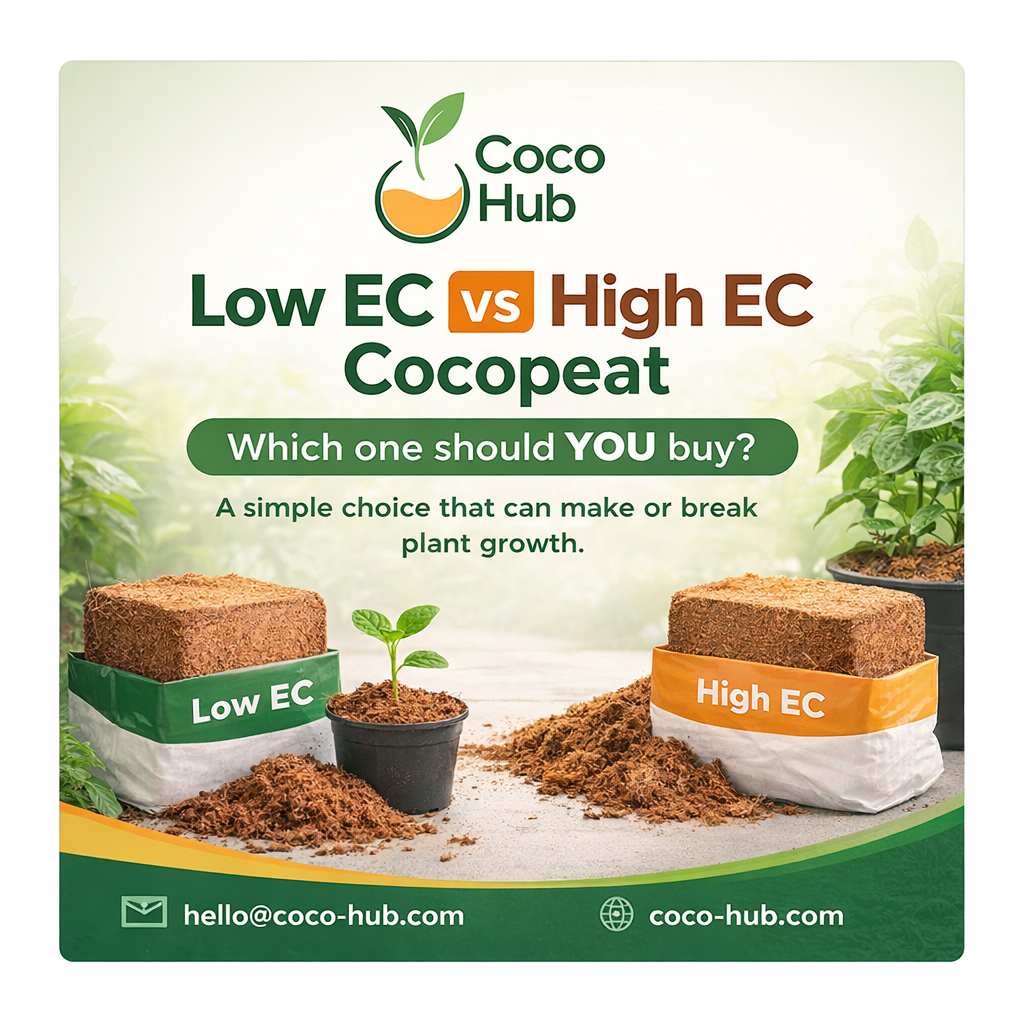
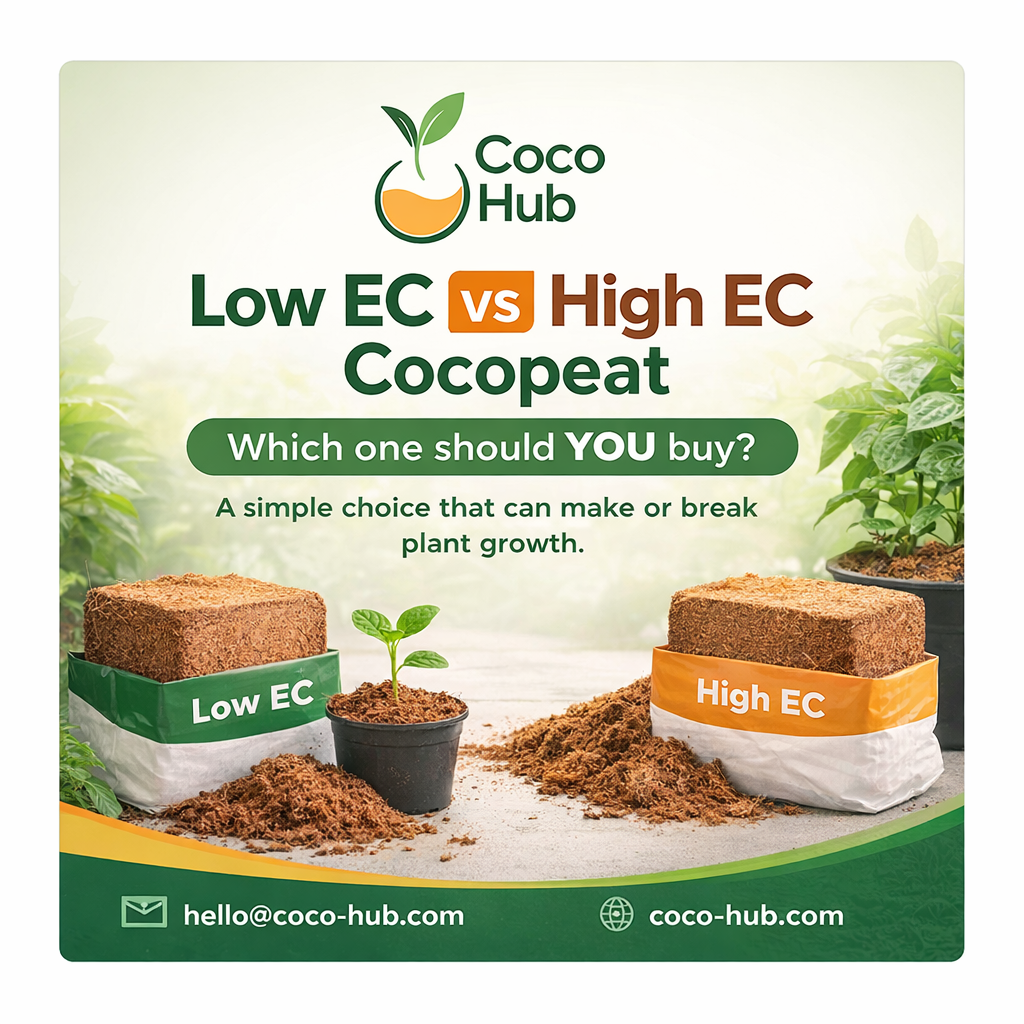
Low EC vs High EC cocopeat is one of the most important comparisons a grower can understand when choosing a growing medium. The EC level of cocopeat directly affects root health, nutrient absorption, crop uniformity, and long-term yield performance. Yet, many growers unknowingly select the wrong type of cocopeat, leading to poor plant growth, nutrient lockout, and inconsistent results.
However, despite its popularity, many growers fail to achieve expected results when using cocopeat. Plants show slow growth, leaves turn yellow, roots struggle, and nutrient programs seem ineffective.
In many such cases, the issue is not fertilizer, irrigation, or climate — it is the EC level of the cocopeat itself.
Understanding the difference between Low vs High EC cocopeat is one of the most important decisions a grower can make. This single factor can influence root health, nutrient availability, crop uniformity, yield stability, and long-term profitability.
This article explains that difference in depth — without oversimplification and without sales fluff.
What Is EC in Cocopeat? A Clear and Practical Explanation
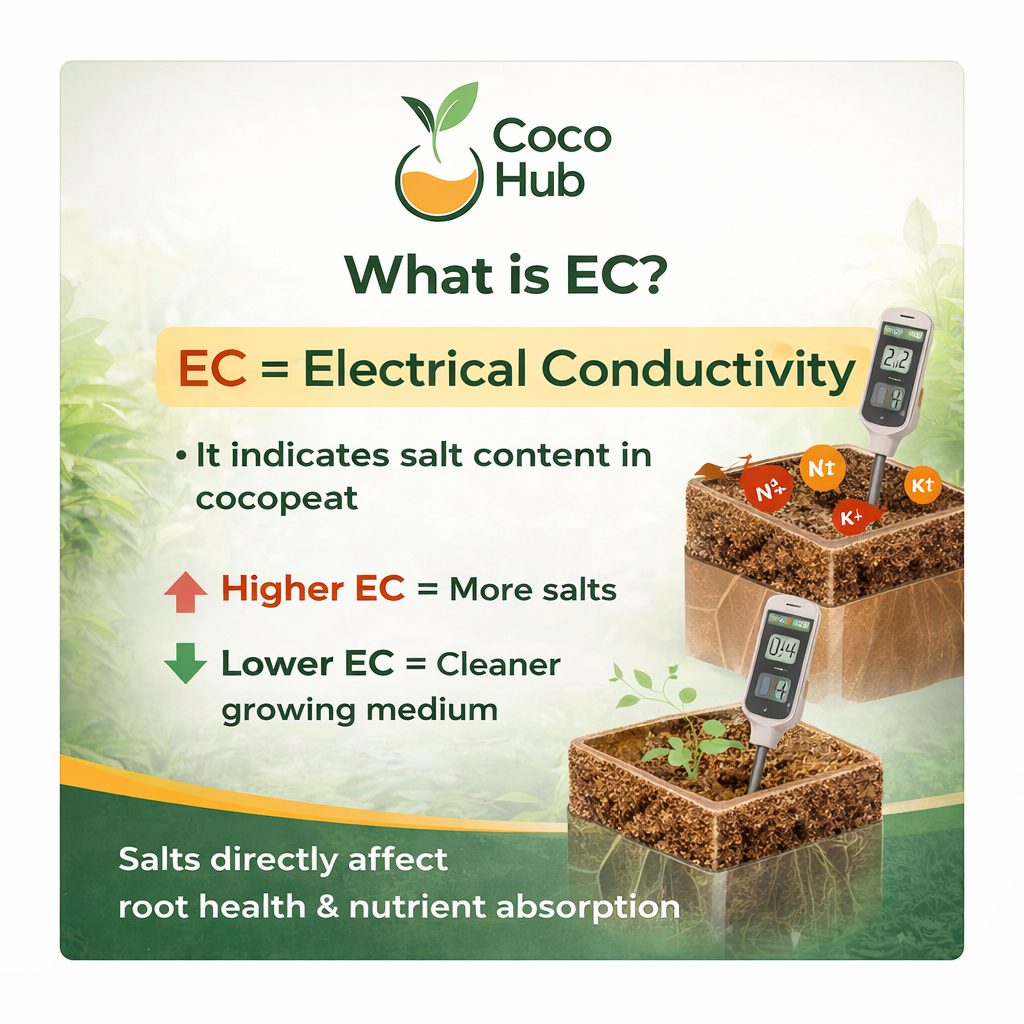
EC stands for Electrical Conductivity. In cocopeat, EC measures the concentration of soluble salts present in the growing medium.
These salts mainly come from:
- Natural minerals in coconut husk
- Seawater exposure during retting
- Processing and storage conditions
Common salts include sodium (Na⁺), potassium (K⁺), and chlorides (Cl⁻).
Why EC Matters for Plants
Plants absorb water and nutrients through osmosis. When salt concentration in the root zone is high:
- Water uptake becomes difficult
- Nutrient absorption is disrupted
- Roots experience osmotic stress
This is why EC level directly affects plant health.
Low EC cocopeat provides a cleaner, more controlled root environment.
High EC cocopeat introduces additional salts that must be managed carefully.
How Wrong EC Cocopeat Affects Plant Growth
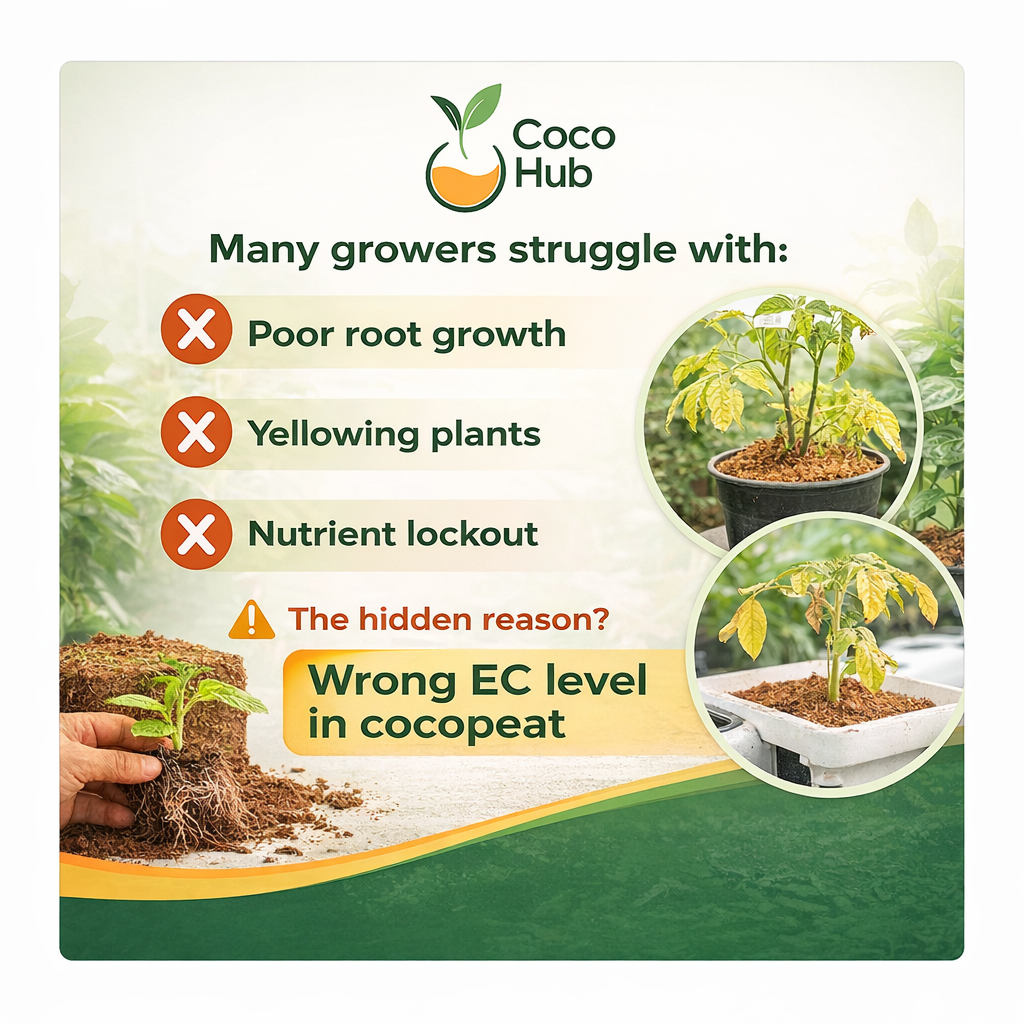
Using the wrong EC cocopeat often leads to visible but misunderstood symptoms.
Common problems include:
- Poor root growth
- Yellowing leaves
- Nutrient lockout
- Slow or uneven development
These issues are often misdiagnosed as fertilizer or disease problems, while the real issue lies in the EC level of the cocopeat itself.
Low EC Cocopeat: Definition, Characteristics, and Purpose
Low EC cocopeat is cocopeat that has been thoroughly washed and buffered to remove excess soluble salts and stabilize nutrient exchange capacity.
Typical Properties of Low EC Cocopeat
- EC value usually ≤ 0.5 mS/cm
- Very low sodium and potassium
- Calcium-buffered
- Stable pH (generally 5.5–6.5)
This type of cocopeat is designed for precision growing systems where nutrient control is critical.
Why Low EC Cocopeat Is Preferred in Modern Agriculture
Low EC cocopeat allows growers to:
- Start with a neutral growing medium
- Control nutrients precisely through fertigation
- Avoid salt stress in sensitive crops
Because there are fewer background salts, fertilizers behave predictably. Nutrient recipes remain stable, and plants respond consistently.
This is especially important in:
- Hydroponics
- Greenhouses and polyhouses
- Nurseries and propagation units
- Export-grade vegetable and flower cultivation
In such systems, consistency matters more than cost, and low EC cocopeat delivers that consistency.
Growers transitioning from traditional methods may also want to understand the broader comparison of cocopeat vs soil for plant growth, especially when evaluating long-term sustainability and yield consistency.
Key Benefits of Low EC Cocopeat
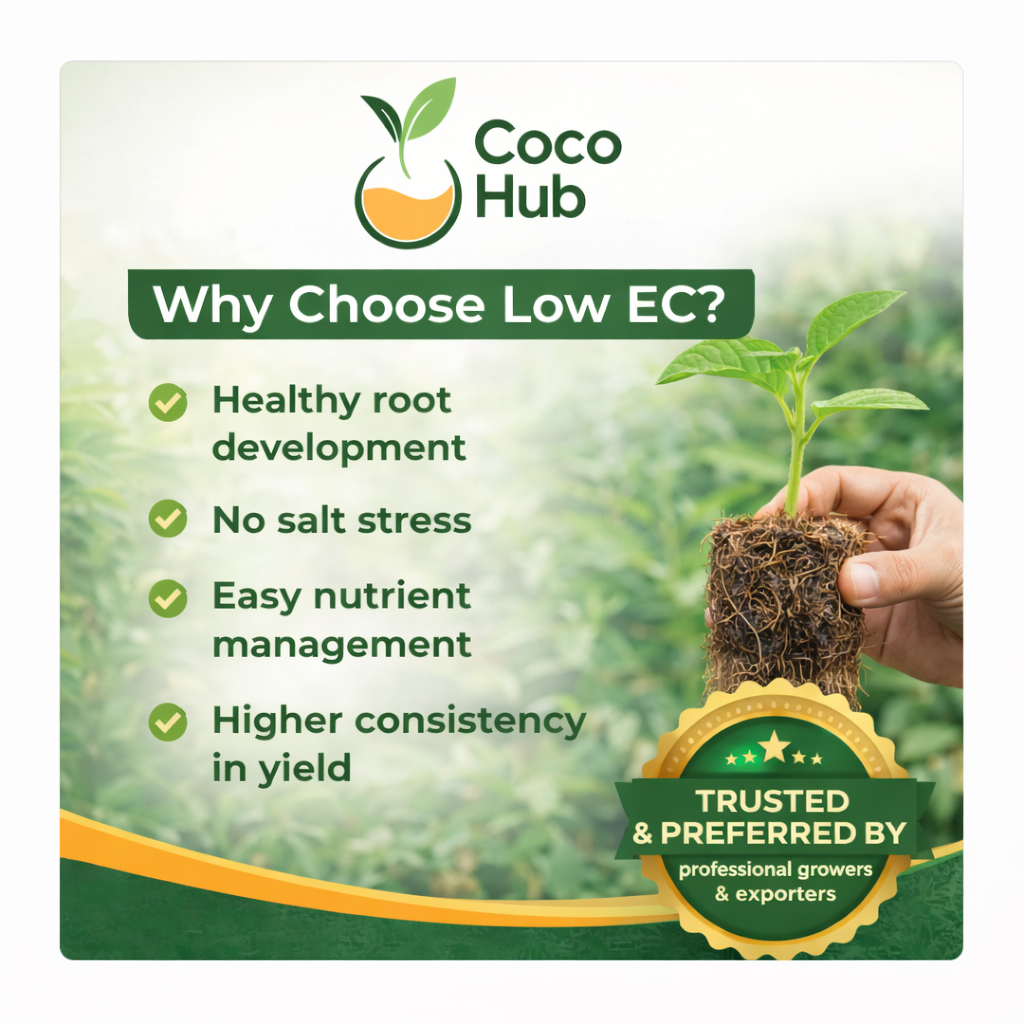
- Healthier root development
Roots grow freely without osmotic stress. - No nutrient competition
Added fertilizers are not displaced by sodium or potassium. - Predictable crop performance
Uniform growth across batches and seasons. - Lower risk of crop failure
Especially in early growth stages. - Higher long-term ROI
Reduced losses outweigh slightly higher material cost.
For professional growers, low EC cocopeat is not an expense — it is a risk-management tool.
High EC Cocopeat: Definition, Characteristics, and Purpose
High EC cocopeat is cocopeat that has undergone minimal washing and retains a significant amount of natural salts.
Typical Properties of High EC Cocopeat
- EC commonly between 1.5 and 3.0 mS/cm
- Higher sodium and potassium content
- Strong water-holding capacity
- Lower processing cost
High EC cocopeat is not inherently “bad,” but it is context-sensitive. Its suitability depends entirely on how and where it is used.
Where High EC Cocopeat Makes Sense
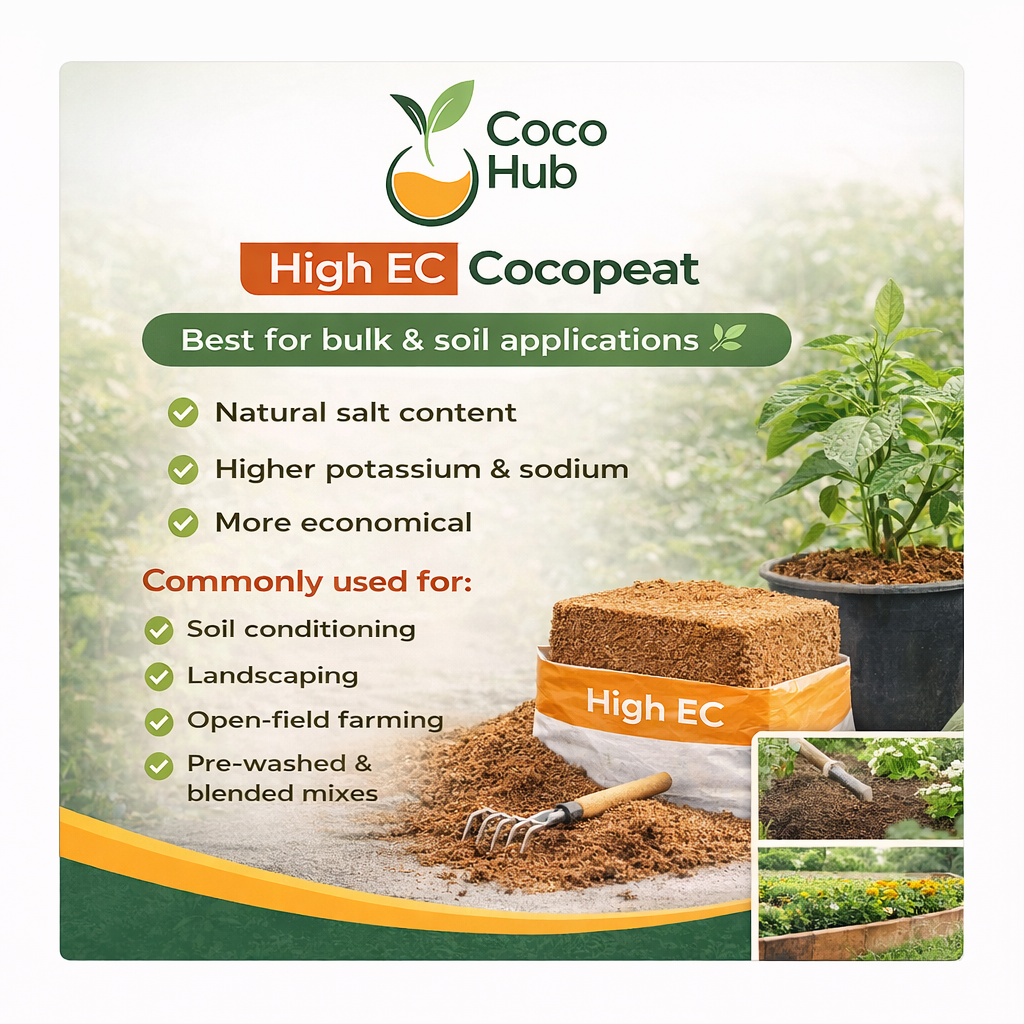
High EC cocopeat is commonly used for:
- Soil conditioning
- Landscaping applications
- Open-field farming
- Bulk potting mix blends
In these scenarios:
- Soil buffers excess salts
- Crops are less sensitive
- Nutrient precision is not critical
When used correctly, high EC cocopeat can be an economical and effective soil amendment.
The Hidden Risk of Using High EC Cocopeat Incorrectly
Problems arise when high EC cocopeat is used directly for sensitive crops or in controlled systems without preparation.
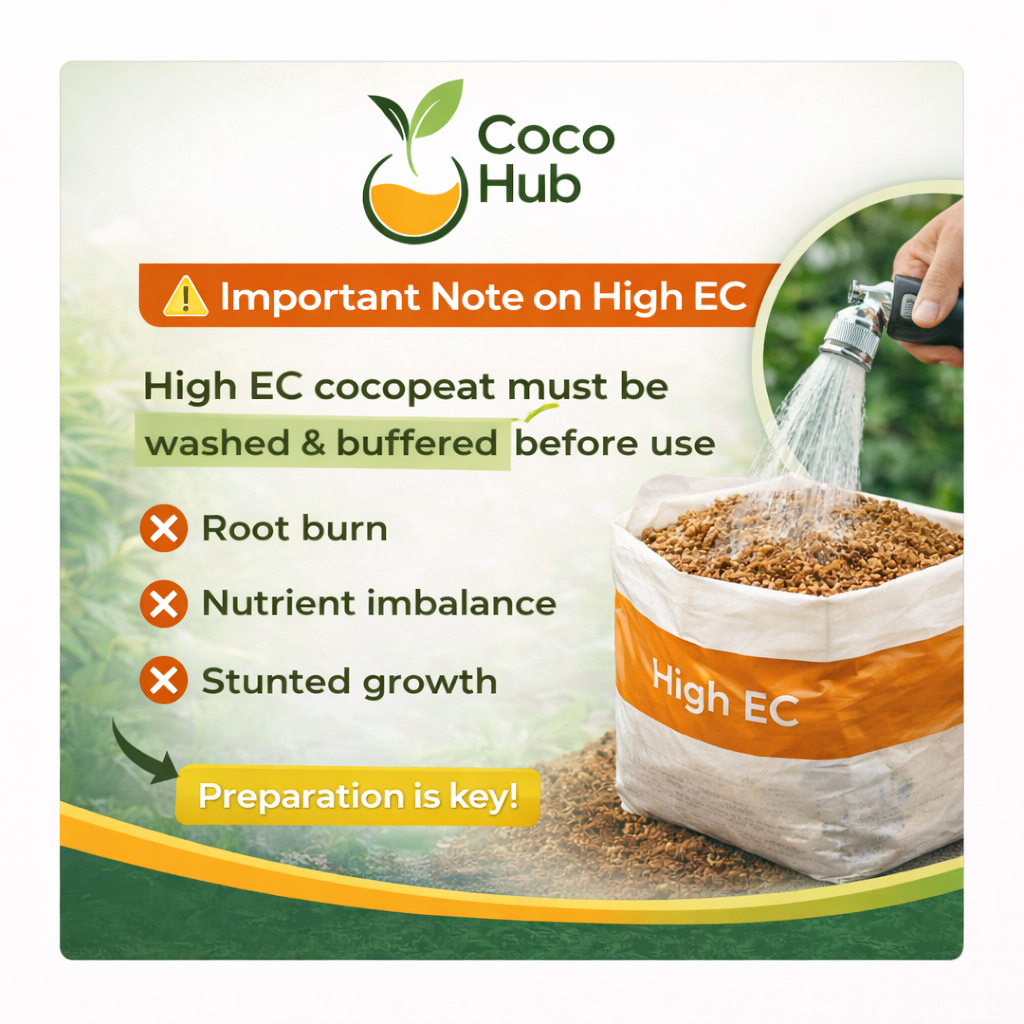
Common consequences include:
- Root burn
- Nutrient lockout
- Reduced water uptake
- Stunted or uneven growth
Many growers mistakenly blame fertilizers or water quality, while the real issue lies in unmanaged EC levels.
Washing and Buffering: The Difference Between Success and Failure
To make high EC cocopeat usable for crops, two steps are essential:
Washing
Washing removes excess soluble salts and lowers EC to safer levels.
Buffering
Buffering replaces sodium and potassium ions with calcium, improving nutrient uptake and root stability.
Without these steps, high EC cocopeat remains a high-risk input for most crops.
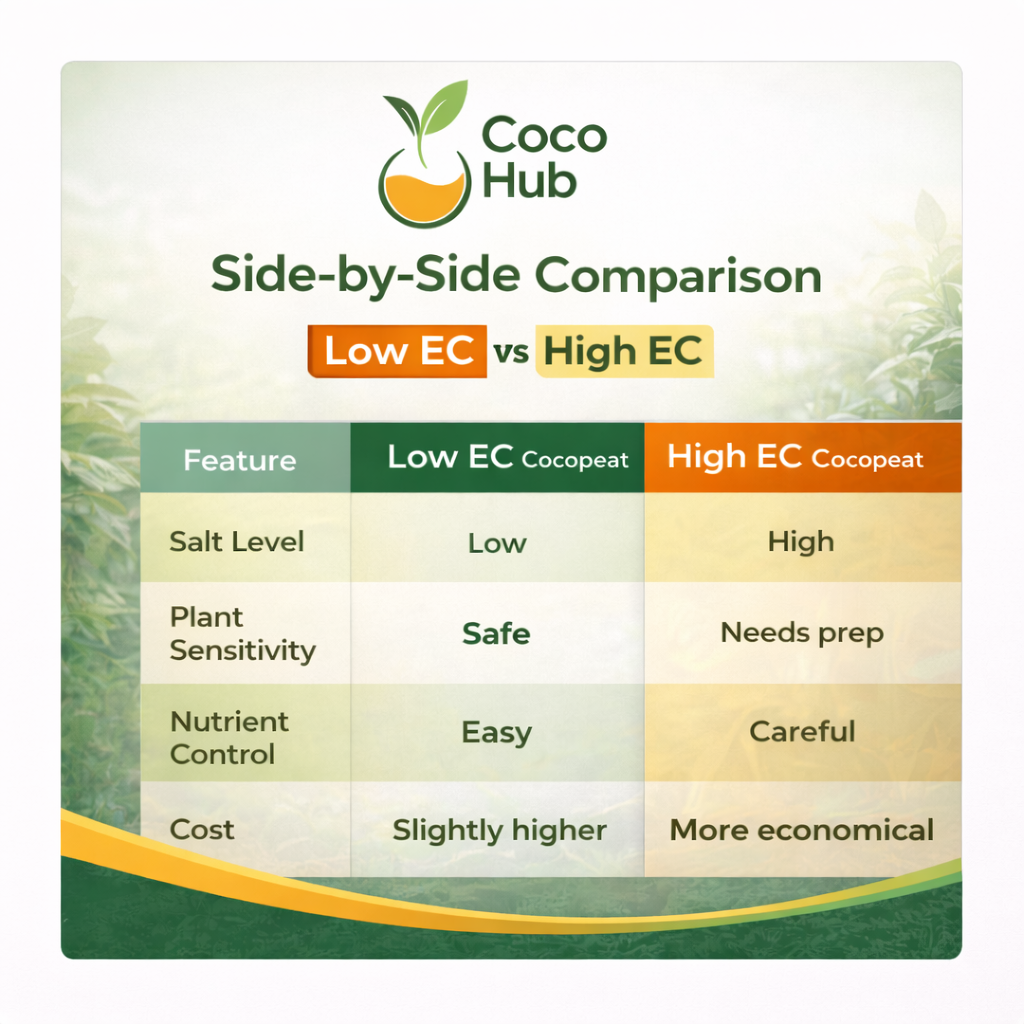
| Parameter | Low EC Cocopeat | High EC Cocopeat |
|---|---|---|
| Salt Content | Very low | High |
| Plant Safety | High | Conditional |
| Nutrient Control | Easy | Complex |
| Best Use | Hydroponics, nurseries | Soil, landscaping |
| Processing Level | Washed & buffered | Minimal |
| Cost | Higher | Lower |
How to Choose the Right Cocopeat for Your Needs
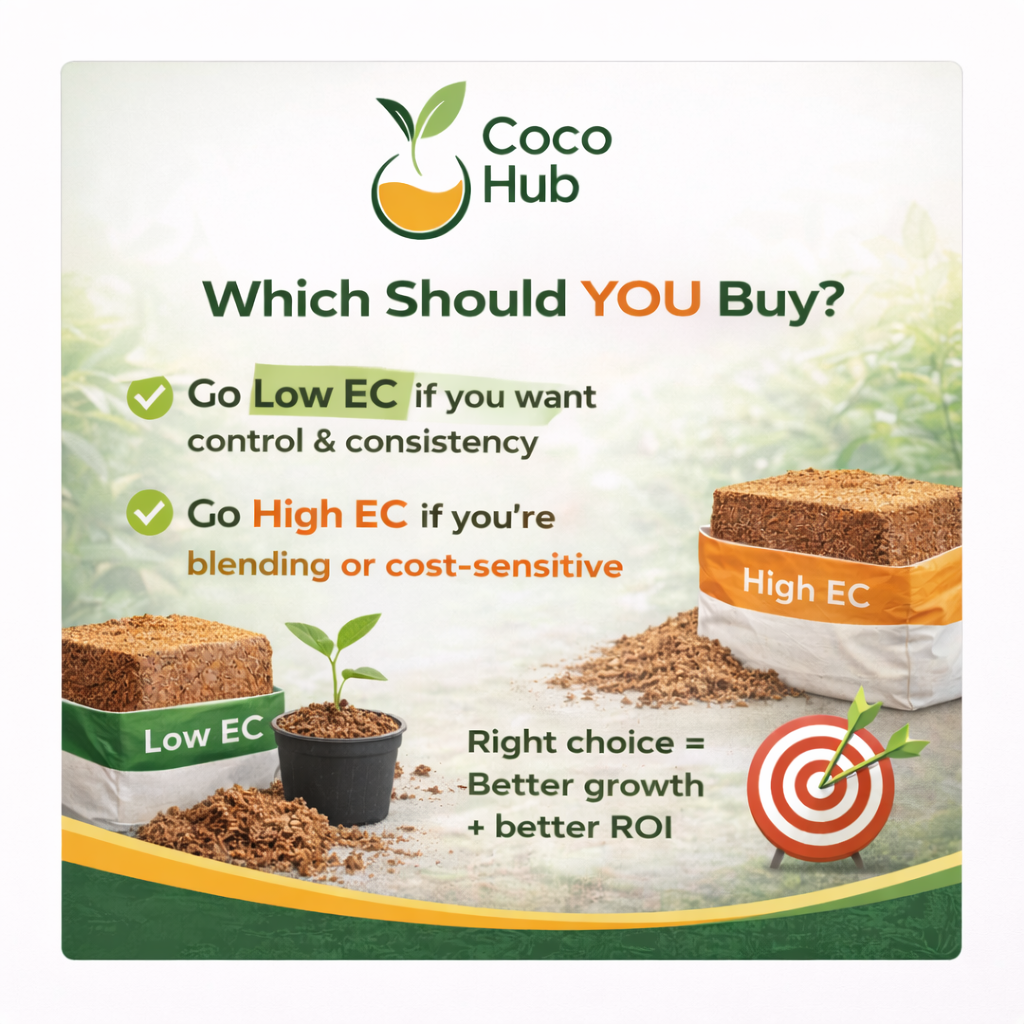
Choose Low EC Cocopeat If:
- You use hydroponics or fertigation
- You grow seedlings or sensitive crops
- You need consistent, export-quality output
- You want predictable nutrient behavior
Choose High EC Cocopeat If:
- You mix it with soil
- You focus on landscaping or open fields
- You can wash and buffer properly
- Cost efficiency is a priority
The wrong choice often costs more in crop loss than the difference in material price.
Common Buyer Mistakes When Choosing Cocopeat
- Buying based only on compression ratio
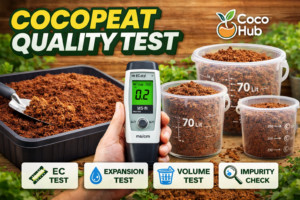
- Ignoring EC test reports
- Assuming all cocopeat is identical
- Using high EC cocopeat without preparation
- Confusing potassium content with nutrient benefit
Avoiding these mistakes can significantly improve crop outcomes.
Why Quality Control Matters in Cocopeat Supply
Cocopeat quality depends on:
- Raw husk source
- Washing process
- Buffering standards
- Drying and storage conditions
Inconsistent processing leads to inconsistent EC — and inconsistent results in the field.
This is why professional growers increasingly demand documented EC and pH specifications, not just volume or weight.
For international buyers, understanding cocopeat HS code, import duties, and export packaging requirements is just as important as choosing the right EC level, especially when sourcing cocopeat from India.
If you are sourcing in bulk, this detailed guide on how to import cocopeat from India explains documentation, quality checks, logistics, and common mistakes international buyers should avoid.
Final Thoughts: EC Level Is a Strategic Input Decision
The difference between Low vs High EC cocopeat is not a technical detail reserved for experts. It is a foundational decision that influences every stage of plant growth.
Choosing the right EC level:
- Protects root health
- Improves nutrient efficiency
- Stabilizes yield
- Maximizes return on investment
When growers understand EC, cocopeat becomes a performance enhancer — not a gamble.
Trusted External Resources on Cocopeat & EC Levels
According to FAO guidelines on soilless growing media, managing salinity and substrate quality is critical for sustainable crop production.
🌍 FAO – Soilless Growing Media
🔗 https://www.fao.org/soils-portal/soil-management/soil-organic-matter/en/
University research on soilless growing media highlights how salt concentration and substrate composition directly affect root development and nutrient availability.
🎓 Oklahoma State University – Soilless Media Research
🔗 https://extension.okstate.edu/fact-sheets/soilless-growing-media.html
Electrical conductivity in agricultural substrates is widely used as a benchmark to assess salinity levels and plant stress risk.
📘 ScienceDirect – Electrical Conductivity in Agriculture
🔗 https://www.sciencedirect.com/topics/agricultural-and-biological-sciences/electrical-conductivity
Looking for the Right Cocopeat for Your Application?
Choosing between low EC and high EC cocopeat is only the first step. Quality, consistency, and export compliance matter just as much.
At Coco Hub, we supply:
- ✔ Low EC cocopeat (washed & buffered)
- ✔ High EC cocopeat (bulk & soil-grade)
- ✔ Export-ready packaging
- ✔ Consistent EC & pH specifications
📩 Email: [email protected]
🌐 Website: https://coco-hub.com
Tell us your crop, growing method, and destination country — we’ll help you choose the right cocopeat.



Add comment